
What Is a Digital Loyalty Program? A Complete Guide for Small Businesses
A practical guide for small business owners explaining what a digital loyalty program is, how browser-based digital stamp cards compare with points, tiers, and paper punch cards, and how to run a simple repeat-customer program without building a mobile app.
By REPEZO Editorial Team
Customer Retention & Product Research
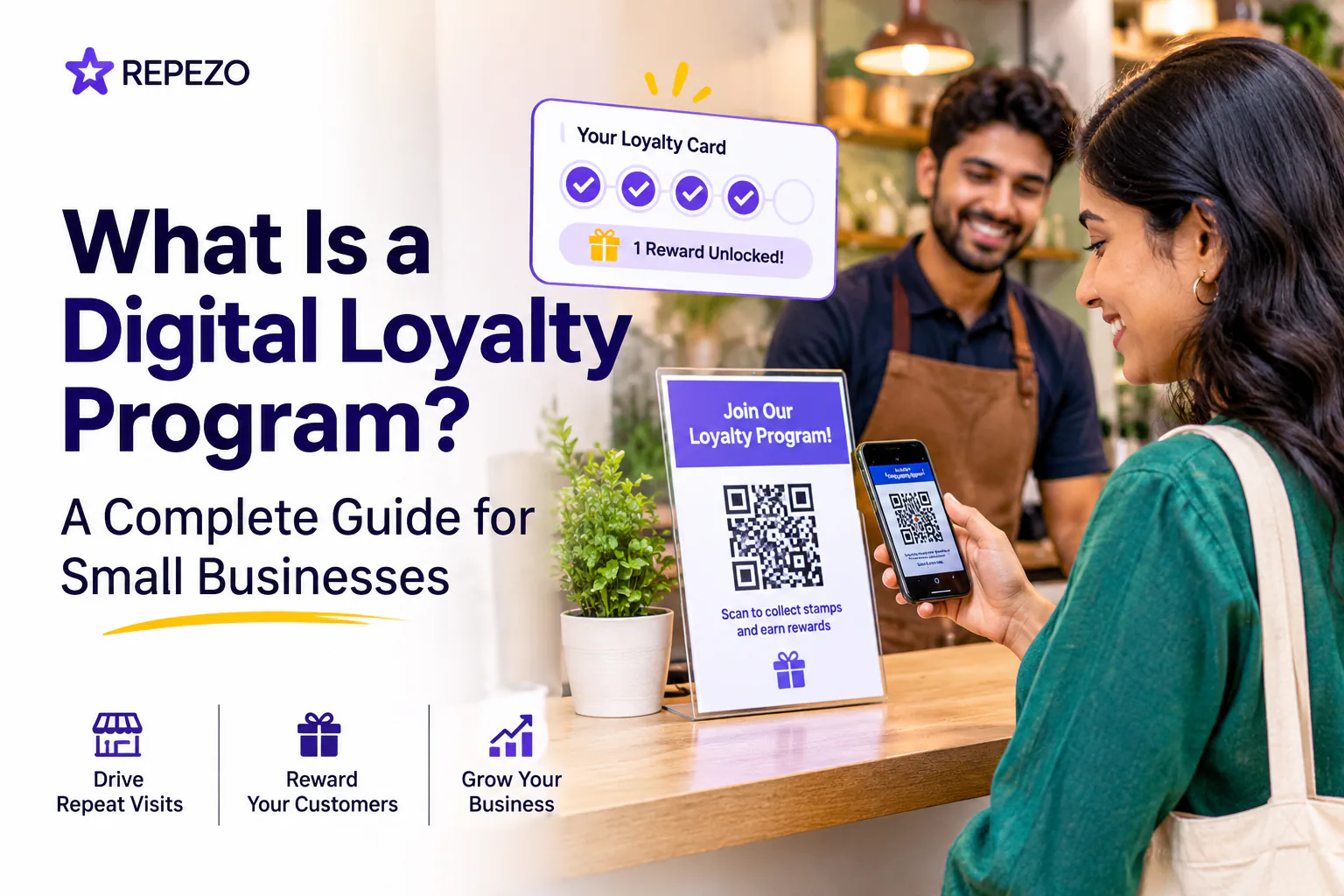
A digital loyalty program is an online system that helps a business track repeat purchases and reward returning customers without relying on paper punch cards or plastic membership tags. Instead of handing out cardboard cards that easily get misplaced, a store records customer visits digitally—through a mobile browser, store QR code, or shareable store link—and unlocks a reward once a customer reaches a clear milestone.
For small businesses such as cafes, restaurants, bakeries, salons, retail boutiques, and online parcel sellers, keeping existing buyers coming back is often more practical than constantly chasing first-time traffic through paid ads. When competition is high on every street and social feed, a clear customer loyalty program gives satisfied buyers a simple reason to return to your business rather than trying a nearby alternative.
Many small business owners hesitate to launch digital loyalty because they assume it requires expensive point-of-sale hardware, complicated points math, or building a standalone smartphone app. In practice, modern digital loyalty card platforms—especially browser-based digital stamp cards—are designed to fit smoothly alongside ordinary counter or delivery workflows.
What Is a Digital Loyalty Program?
At its core, a digital loyalty program replaces physical punch cards, paper vouchers, and manual notebooks with an online record of a customer’s relationship with your business. Each time a customer buys from you and their visit is confirmed, their digital progress updates toward a clearly stated reward.
Unlike informal verbal promises or occasional seasonal sales offered to anyone walking in, a structured loyalty rewards program rewards cumulative repeat behavior over time. Customers can see how many visits they have completed and what reward comes next, while business owners gain organized visibility into who their repeat customers actually are.
Key Elements of a Digital Loyalty Program
Most effective programs—whether run by a neighborhood coffee shop or an online brand—share five foundational elements:
- Simple Customer Identity: A lightweight way for returning buyers to access their card (such as signing into a browser-based account via Google or email verification) without filling out paper forms at a busy counter.
- A Clear Earning Rule: An understandable condition for earning progress, such as one merchant-approved visit or qualifying order.
- A Visible Progress Tracker: A digital loyalty card showing stamps collected, stamps remaining, and any rewards ready to claim.
- A Margin-Safe Reward: An incentive that feels genuinely worthwhile to customers without cutting unsustainably into your store’s profit per sale.
- Merchant Control and Retention Visibility: A confirmation step so stamps are only issued after merchant approval, paired with basic insights showing how many customers return over time.
How Does a Digital Loyalty Program Work?
Understanding the workflow helps explain why browser-based digital loyalty feels smoother than managing paper punch cards. With a browser-based QR code loyalty program, customers do not need to visit an app store or download a separate mobile application.
Here is how a typical merchant-controlled digital stamp workflow operates from start to finish:
- Discovery at Checkout or Delivery: A customer notices a QR standee beside the payment counter, clicks a store link shared online, or sees a printed card inside a delivery parcel.
- Quick Browser Access: Scanning the QR code or opening the store’s unique URL opens the store’s loyalty page directly in the customer’s mobile browser. Existing signed-in users view their card right away, while new users register using 1-click Google Sign-up or manual email OTP verification.
- Purchase and Visit Request: After completing a purchase, the store owner or staff member submits a visit request for that customer’s visit.
- Merchant Approval Before Stamp Issuance: Scanning a QR code alone does not automatically award a stamp. The merchant receives a notification and approves the visit request in the Merchant Dashboard before the stamp is credited to the customer’s card. Note that this workflow relies on the visit request and merchant approval step—it does not independently verify transactions through a point-of-sale (POS) terminal or payment gateway.
- Reward Unlock and New Cycle: Once the customer reaches the required number of stamps, the reward becomes available to claim immediately or save for a future visit. Afterward, the customer can begin a new loyalty cycle while keeping their previous card and reward history intact.
Conceptual Diagram · Browser Loyalty Workflow
How a Browser-Based Digital Loyalty Program Works
- 01
Scan Store QR or Open Link
Opens store loyalty page in mobile browser (no app download)
- 02
Access Customer Card
Logged-in users view directly; new users join via Google Sign-up or Email OTP
- 03
Visit Request Submitted
After a purchase, merchant or staff submits a visit request
- 04
1-Click Merchant Approval
QR scan alone does not grant a stamp; merchant confirms in dashboard
Verification Checkpoint
- 05
Stamp Added & Reward Cycle
Claim unlocked reward now or later; past card history stays saved
Separating QR scanning from stamp issuance gives business owners practical control. A QR code scan or photo alone cannot award stamps—every stamp still requires a visit request and explicit merchant approval.
Different Types of Digital Loyalty Programs
Across the wider retail and hospitality industry, businesses choose among five main digital loyalty program structures. When comparing tools, it is important to separate general industry concepts from what a specific platform actually offers. For instance, Repezo is built specifically as a browser-based digital stamp card platform—it does not currently support points, cashback wallets, tiered memberships, Apple Wallet passes, or Google Wallet passes.
Digital Stamp Cards
A digital stamp card modernizes the familiar “collect X stamps, get a reward” punch card into an online tracker. Each merchant-confirmed purchase adds one stamp until the card reaches its milestone. Because customers understand the rule at a glance without doing math, stamp cards suit cafes, restaurants, bakeries, salons, and specialty retail shops very well. Repezo focuses on this model, supporting custom merchant-defined rewards and multiple independent campaigns.
Points-Based Programs
In a points-based system, customers accumulate points tied to how much they spend—for example, 1 point per 100 BDT—and later redeem those points for discounts or selected items. Points fit supermarkets or multi-category pharmacies where basket values swing widely, though calculating point conversions can feel abstract for everyday shoppers. (Repezo does not currently support points-based loyalty.)
Tiered Membership Programs
Tiered programs group members into status levels—such as Silver, Gold, or Platinum—based on total spend or annual visit count, unlocking stronger benefits at upper tiers. Large hotels, airlines, and national fashion chains use tiers to reward their highest spenders, but managing multi-level perks is often unnecessarily complex for small single-location teams. (Repezo does not currently support tiered memberships.)
Cashback and Store Credit Programs
Cashback programs credit a fixed percentage of each bill back into a digital store wallet for future orders. Buyers appreciate clear monetary credit, yet automatic cashback on every sale can steadily compress margins if average order frequency does not rise enough to compensate. (Repezo does not currently support cashback or store credit wallets.)
Paid or VIP Loyalty Programs
Paid programs charge an upfront monthly or annual fee for ongoing benefits like free delivery or member-only pricing. While effective for established subscription businesses with very high order frequency, asking first-time neighborhood shoppers to pay upfront usually discourages sign-ups. (Repezo does not currently support paid VIP subscriptions.)
| Program Model | How Customers Earn | Typical Reward | Best Fit | Main Advantages | Key Limitations |
|---|---|---|---|---|---|
| Digital Stamp Card | 1 stamp per merchant-confirmed visit or qualifying order | Free item or fixed discount after N stamps | Cafes, restaurants, salons, boutiques, online parcel sellers | Easy to grasp instantly; simple counter workflow; clear reward cost | Less tied to exact bill size unless paired with a minimum spend note |
| Points-Based | Points earned per currency unit spent | Redeem accumulated points for discounts or catalog items | Supermarkets, pharmacies, large multi-SKU retail | Rewards larger basket sizes proportionally | Point math can confuse customers; often needs bill-value entry at checkout |
| Tiered Membership | Reaching cumulative spend or visit thresholds | Status perks, priority access, higher earn rates | Hotels, airlines, multi-branch retail chains | Motivates top spenders to stay within one brand | Complex to explain and administer for lean small-business teams |
| Cashback / Store Credit | Percentage of purchase stored as credit | Wallet credit applied toward next bill | Apparel, beauty retail, frequent e-commerce | Direct monetary value feels tangible to buyers | Erodes margin across every purchase; accounting liability management |
| Paid / VIP Club | Upfront recurring or annual membership fee | Free shipping, flat discounts, exclusive access | High-frequency delivery platforms, wholesale clubs | Upfront membership cash flow and strong lock-in | High friction for casual or first-time local shoppers |
Benefits for Small Businesses
Small business owners often assume structured loyalty programs only matter for major retail chains. In reality, losing a hard-won customer hurts an independent shop proportionally more because small businesses operate with tighter marketing budgets.
Historical research in the Harvard Business Review by Amy Gallo (The Value of Keeping the Right Customers, 2014) notes that acquiring a new customer may cost 5 to 25 times more than retaining an existing one, depending on the study and industry. In the same Harvard Business Review analysis—referencing Frederick Reichheld’s research at Bain & Company, alongside Reichheld and Earl Sasser’s Zero Defections: Quality Comes to Services (1990) and Reichheld’s Prescription for Cutting Costs (2001)—a 5% increase in customer retention was associated with a 25% to 95% increase in profit across the industries studied. Those historical findings highlighted why returning buyers often strengthen unit economics: established customers cost less to serve, buy more comfortably over time, and refer friends organically. Of course, these are historical research benchmarks from specific studies, not guaranteed outcomes for every small business.
Later loyalty research from McKinsey & Company adds important nuance about how programs generate value. In Next in loyalty: Eight levers to turn customers into fans (2021), McKinsey reports that top-performing loyalty programs can boost annual revenue from customers who redeem points by 15% to 25%, driven by higher purchase frequency, larger basket sizes, or both. Separate McKinsey loyalty research (2021 Top Picks: From Recovery to Growth) similarly observes that redeemer members spend 25% more than enrolled-but-inactive members, whereas typical active non-redeeming members spend roughly 10% more. The practical lesson for small businesses is clear: enrollment alone changes very little—meaningful returns depend on keeping customers engaged enough to actually collect and redeem rewards. Again, these figures describe patterns observed in McKinsey’s research rather than automatic promises for every store.
For an independent shop or online seller, a straightforward digital loyalty program supports four practical operational benefits:
- Stronger Habit Formation: A buyer who has collected several stamps toward a reward has a tangible reason to revisit your store instead of defaulting to whichever competitor is closest that day.
- Targeted Appreciation Instead of Blanket Discounting: Rather than slashing prices across the board for one-time bargain hunters, you reserve rewards for customers who complete multiple confirmed purchases.
- Organized Customer Records: Instead of guessing who your regulars are, a merchant dashboard lets you view customer names, phone numbers, total stamps, active campaigns, and repeat purchasing patterns in one place.
- Consistent Multi-Channel Engagement: A single browser-based card can serve walk-in counter guests as well as delivery customers who order via phone or social media.
Digital Loyalty Cards vs. Traditional Paper Cards
Many small cafes and boutiques begin with printed cardboard punch cards because ordering a box of cards feels quick and familiar. Over time, however, paper cards create practical blind spots and recurring upkeep that slow down busy teams.
| Comparison Criteria | Digital Loyalty Cards | Traditional Paper Punch Cards |
|---|---|---|
| Convenience & Loss Risk | Stored in the customer’s online account and accessible via mobile browser, making cards far less likely to be misplaced or left at home | Easily lost, damaged by water, forgotten in another wallet, or discarded accidentally |
| Stamp Control & Approval | Requires a staff visit request and merchant dashboard approval before a stamp is issued (though it does not verify POS or payment transactions independently) | Physical rubber stamps or hole punches can be duplicated, borrowed, or applied without oversight |
| Printing & Maintenance | Avoids ongoing per-card printing batches; a counter QR standee or parcel card can support ongoing campaigns | Recurring design and printing costs whenever card stock runs low or offers change |
| Campaign Flexibility | Rewards, campaign status, and multiple concurrent offers can be updated digitally without reprinting cards | Fixed terms printed on cardstock; changing rules makes existing printed cards outdated |
| Customer & Retention Visibility | Tracks enrolled customers, newly joined vs. existing members, and repeat purchasers in a structured dashboard | Gives business owners almost no visibility into active cardholders or repeat purchase frequency |
| Multi-Cycle History | Preserves completed cards and reward history across cycles so owners and buyers keep a long-term record | Old paper cards are typically collected or thrown away upon redemption, erasing past history |
Switching to a digital loyalty card does not replace personal hospitality at your counter. Instead, it removes clutter and gives your team clean records while making progress effortless for returning buyers.
How to Create an Effective Loyalty Program
You do not need specialized software skills to launch a worthwhile loyalty rewards program. Focusing on four straightforward decisions before going live protects your margins and keeps participation high.
1. Set a Clear, Margin-Safe Reward Rule
Base your reward math on real product margins rather than copying another store blindly. Suppose a cafe sells regular drinks at an equal price of 250 BDT and offers 1 free drink after a customer collects 10 stamps. Because the customer pays for 10 drinks and receives the 11th drink free, the effective discount across all 11 drinks is approximately 9.1% (1 / 11), assuming equal prices and no other conditions.
Check whether roughly 9.1% on completed cycles fits comfortably inside your gross margin. Also avoid setting milestones so high—such as 25 visits for one small snack—that average customers take a year to reach a single reward. As a practical starting point to test, some businesses begin with milestones around 5 to 10 visits, though the right threshold depends on purchase frequency, product margins, and customer behaviour.
2. Choose the Simplest Model for Your Store
At a busy checkout desk, clarity outperforms cleverness. If staff need two minutes to explain point multipliers or expiry tiers, lines slow down and cashiers quietly stop mentioning the program. A digital stamp card communicates its value cleanly: “Collect stamps on your visits, unlock a reward.” If your basket sizes vary widely—for example, a quick solo snack versus a family dinner—note a fair qualifying rule inside your campaign description, such as “1 stamp per qualifying order above 500 BDT.”
3. Remove Checkout Friction and Train Staff
Some customers may be reluctant to install a separate app for a local business they visit occasionally. Browser-based access removes that installation step, allowing shoppers to open their loyalty card directly in their mobile browser.
Staff consistency matters just as much as software. Place a clean QR standee next to your payment counter and give cashiers a simple one-line prompt after payment: “Would you like to collect a stamp on our digital loyalty card today?” Once the customer opens the card, staff simply submit the visit request so the merchant can approve it.
4. Review Retention Signals and Refine Digitally
After launch, watch how many enrolled buyers actually return rather than celebrating sign-up counts alone. Compare newly joined customers with customers who repeatedly purchase. If buyers join once and stall, you can test a more attainable milestone or add a complementary campaign directly in your dashboard—without throwing away boxes of outdated paper cards.
Common Mistakes Businesses Should Avoid
Many well-meaning small business loyalty programs lose steam early because of avoidable execution missteps:
- Requiring an App Download for Occasional Visits: Some customers may be reluctant to install a separate app for a single local business. Browser-based access lowers that initial barrier.
- Allowing Unchecked Self-Stamping: Letting customers credit themselves simply by scanning an unguarded QR code invites misuse. Requiring a visit request and merchant approval helps reduce casual abuse, though owners should still train staff carefully since no system eliminates every edge case.
- Choosing Unreachable Thresholds: If it takes 20 or 30 visits to earn a minor discount, casual buyers stop caring long before reaching halfway.
- Ignoring Margin Math: Offering steep discounts after just two or three low-margin purchases can hurt cash flow even when footfall climbs.
- Promoting the Card Only During Launch Week: Keep your QR standee visible at checkout, mention the program warmly when handing over receipts, and include a QR card inside delivery parcels.
- Measuring Only Total Sign-Ups: Hundreds of one-time sign-ups do not grow a business if customers never return. Track repeat purchasers and completed cycles instead.
How QR Codes Make Loyalty Programs Easier
When paired with a browser-based loyalty card, a QR code connects a physical checkout counter or delivery parcel directly to a store’s mobile loyalty page—no typing long URLs or installing dedicated hardware required. Even if a first-time visitor needs a brief prompt from staff at checkout, scanning the code acts as a simple bridge between a real-world purchase and an ongoing customer relationship.
Rather than spelling out web addresses over cafe noise or buying barcode scanners, a business places one QR code at key customer touchpoints. Scanning the code—or tapping a unique store link shared in chat—takes the customer straight to the store’s branded loyalty page in their mobile browser.
Conceptual Diagram · Offline & Delivery Touchpoints
From Physical & Parcel Touchpoints to Browser Card
In-Store Checkout
QR standee placed beside payment terminal
Table Tent or Receipt
Visible while guests dine or pack takeaway
Online / F-Commerce Parcel
Printed ‘Thank You’ QR card or store link in order chat
Branded Store Loyalty Page
Opens directly in Chrome or Safari—no app store download required
Unified Customer Actions
Track stamps across campaigns · View past card history · Claim unlocked rewards now or later
For a closer look at how local storefronts and delivery brands set up QR touchpoints in practice, read our dedicated guide to QR code loyalty platforms in Bangladesh.
Practical Examples for Cafes, Restaurants, and Retail Stores
The scenarios below are illustrative examples showing how different small businesses can structure simple digital stamp campaigns—they are sample ideas to adapt to your own pricing and margins rather than live case studies.
Cafes and Beverage Counters
- Illustrative Setup: “Collect 10 stamps and receive 1 free signature drink of equal value.”
- How it works in practice: Office regulars or university students scan the counter QR standee after paying for their coffee, sign in with Google or email OTP, and receive a merchant-approved stamp. Across 11 equal-priced drinks (10 paid plus 1 free), the effective reward works out to roughly 9.1%. Because the customer can see their progress climb from 4/10 to 8/10 in their browser dashboard, they have a friendly nudge to stop at your cafe rather than a competing coffee bar nearby.
Restaurants and Cloud Kitchens
- Illustrative Setup: “Run a 3-order campaign for 5% off, or a 10-order campaign for 20% off a future meal.”
- How it works in practice: A casual restaurant or cloud kitchen might run two separate campaigns independently—one short 3-stamp card designed to turn first-time diners into second- and third-time guests, and a longer 10-stamp milestone card for loyal weekend regulars. Keeping rules clear (such as a minimum order amount noted in the campaign description) ensures the offer stays fair across solo lunches and group dinners.
Retail Boutiques and Online Parcel Businesses
- Illustrative Setup: “Collect 5 merchant-approved stamps on apparel, skincare, or lifestyle purchases to unlock a complimentary item or fixed reward on the 6th order.”
- How it works in practice: Physical boutiques place a QR code at the billing desk. Meanwhile, online and F-commerce brands shipping parcels across Bangladesh can tuck a printed “Thank You” card with their store QR code inside every delivery box. When the customer unboxes their order at home, they scan the card, access the store’s loyalty page in their browser, and stay connected with the brand for repeat orders across multiple reward cycles.
How Repezo Supports Digital Customer Loyalty
If you run a shop, restaurant, or online brand in Bangladesh—where Repezo is currently focused, with international expansion planned for the future—Repezo is built specifically around this simple, browser-first digital stamp card workflow.
Here is a factual overview of how Repezo works today:
- Browser-Based Without an App Download: Customers scan your store QR code or open your unique shareable store link right in their mobile browser. Existing logged-in users view the loyalty card directly, while new customers register with 1-click Google Sign-up or manual registration using email OTP.
- Visit Request and Merchant Approval: Scanning a QR code alone never issues a stamp. After a purchase, the store owner or an employee submits a visit request, and the merchant approves it with 1 click inside the Merchant Dashboard before the stamp is added. (Repezo relies on this merchant confirmation step and does not independently verify transactions via POS or payment gateway integrations.)
- Multiple Campaigns & Flexible Rewards: Merchants can create multiple campaigns, activate or deactivate each campaign independently, and define custom reward rules tailored to their margins. Once a customer reaches the required stamp count, the unlocked reward can be claimed immediately or saved for later, and customers can start a fresh cycle while preserving their previous card and reward history.
- Dedicated Customer & Merchant Dashboards: Customers get a unified Customer Dashboard showing all joined stores, stamps collected and remaining, unclaimed unlocked rewards, and direct in-app messaging with store owners. Merchants get an organized customer directory (name, phone number, total stamps, joined campaigns, and current campaign progress) along with four core retention analytics metrics: Total customers, Newly joined customers, Existing customers, and Customers who repeatedly purchase.
- Direct Store Engagement Links: Merchants can display clickable Google Review, WhatsApp chat, and social media links inside the loyalty experience. Clicking these opens the relevant platform directly; Repezo does not track or verify whether a customer leaves a review or follows a page. Official WhatsApp API-based WhatsApp Automation is also planned as an upcoming feature and is not currently active.
To keep product expectations transparent: Repezo is a digital stamp card platform and does not currently support points systems, cashback wallets, tiered memberships, Apple Wallet passes, or Google Wallet passes.
If you would like to explore how a straightforward browser-based digital stamp card can work for your store or parcel deliveries, visit the Repezo homepage, browse more guides on the Repezo Blog, or read our practical overview of QR code loyalty platforms in Bangladesh.
Frequently Asked Questions
What is a digital loyalty program?
A digital loyalty program is an online system businesses use to record repeat purchases and reward returning customers. Instead of paper punch cards, customers view their stamps or progress digitally—often in a mobile browser—giving small businesses a clean way to encourage repeat visits.
How does a digital loyalty card work without an app?
A browser-based digital loyalty card opens as a mobile web page when a customer scans a store QR code or taps a unique store URL. Customers sign in using options such as Google Sign-up or email OTP verification and check their stamps or rewards anytime without installing an app.
Do customers get a stamp automatically when they scan a QR code?
No. On Repezo, scanning a QR code opens the store’s loyalty page, but it does not issue a stamp automatically. After a purchase, the merchant or an employee submits a visit request, and the merchant must approve it in the Merchant Dashboard before the customer receives the stamp.
Does Repezo verify purchases through a POS or payment gateway?
No. Repezo does not independently verify payments through a POS system or payment gateway. Instead, it uses a visit-request and merchant-approval workflow so the business owner or staff confirms eligible purchases before stamps are awarded.
What types of digital loyalty programs exist, and which fits small businesses best?
Common industry models include digital stamp cards, points-based systems, tiered memberships, cashback or store credit, and paid VIP clubs. For most independent cafes, restaurants, salons, and boutiques, a digital stamp card is the simplest model for staff to manage and customers to understand.
How does Repezo differ from points-based or cashback loyalty platforms?
Repezo focuses specifically on browser-based digital stamp cards rather than points accumulation, cashback wallets, or tiered memberships. Merchants define stamp milestones and rewards, keeping rules clear for buyers and predictable for store margins.
Can a business run more than one loyalty campaign at the same time?
Yes. On Repezo, merchants can create multiple loyalty campaigns with different reward rules and activate or deactivate each campaign independently—useful for separating dine-in, takeaway, seasonal, or product-specific offers.
What happens after a customer completes a digital stamp card?
Once the required stamps are collected, the reward unlocks so the customer can claim it immediately or save it for a later visit. Afterward, the customer can start a fresh stamp cycle while keeping their previous card and reward history preserved.
Does Repezo support Apple Wallet or Google Wallet passes?
No. Repezo does not currently support Apple Wallet or Google Wallet passes. Customers access their loyalty cards directly in their standard mobile web browser through a store QR code or shareable store link.
What analytics can a merchant view in Repezo?
Merchants can view an organized customer list (name, phone number, total stamps, campaigns joined, and current campaign progress) alongside four retention metrics: Total customers, Newly joined customers, Existing customers, and Customers who repeatedly purchase.
Does Repezo verify Google Reviews or run automated WhatsApp broadcasts right now?
No. Direct Google Review, WhatsApp chat, and social links open the external platform when clicked, and Repezo does not verify whether a review or follow was completed. Official WhatsApp API-based WhatsApp Automation is an upcoming planned feature, not currently active.
Conclusion
A digital loyalty program works best for small businesses when it stays simple for both sides of the counter. By replacing fragile paper cards with a clear, browser-based digital stamp card—backed by merchant-approved visit requests, organized customer visibility, and preserved reward history—you give satisfied customers an easy reason to return and build steadier repeat business over time.
Related Articles
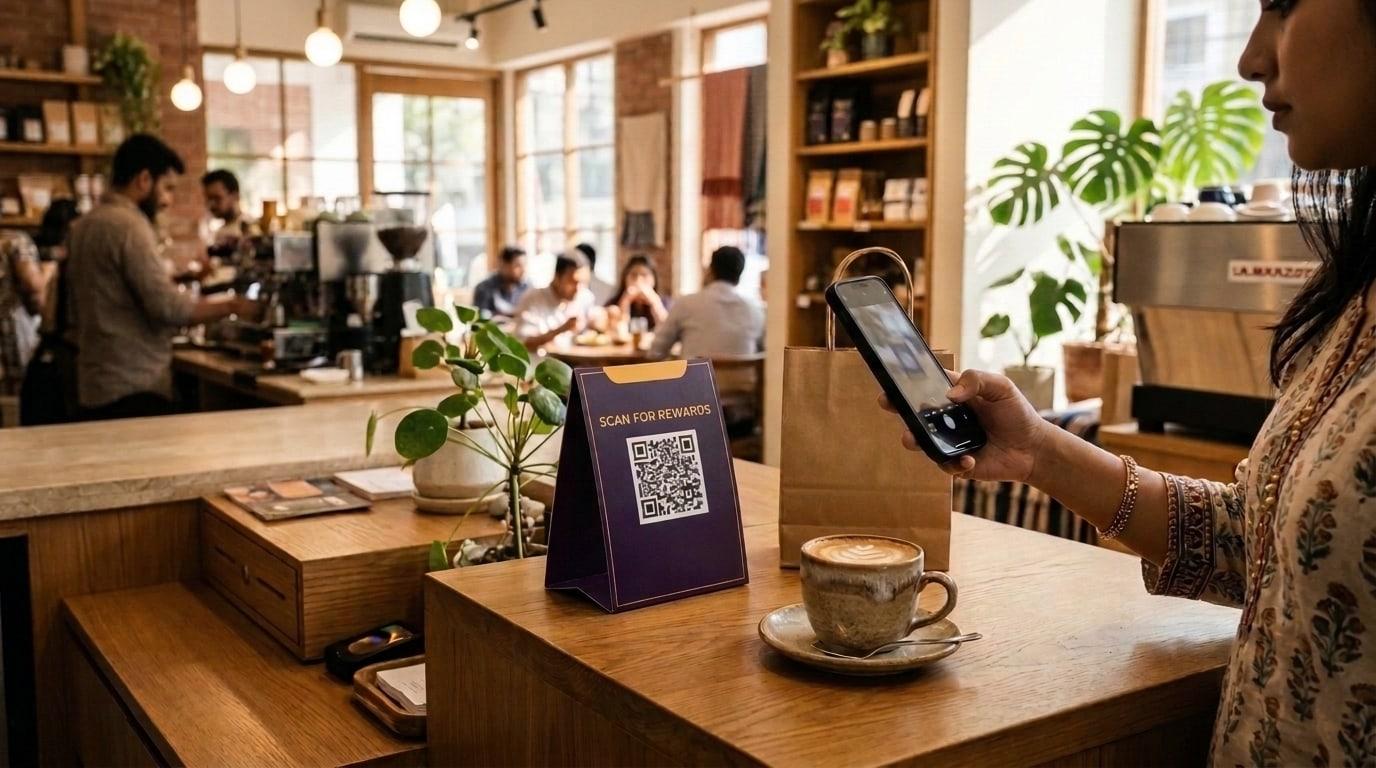
QR Code Loyalty Platform in Bangladesh: A Complete Guide for Businesses
Explore QR code loyalty programs in Bangladesh with branded digital stamp cards, flexible rewards, customer dashboards, and merchant visit approvals.
REPEZO Platform
Turn everyday store visits into repeat customers
Launch digital loyalty stamps, Google review prompts, and customer insights in minutes with a single QR scan and no app download.